Ethanol Fuel Mix
Calculator
Rapid prototyping a precision tool for performance automotive enthusiasts who blend their own fuel.
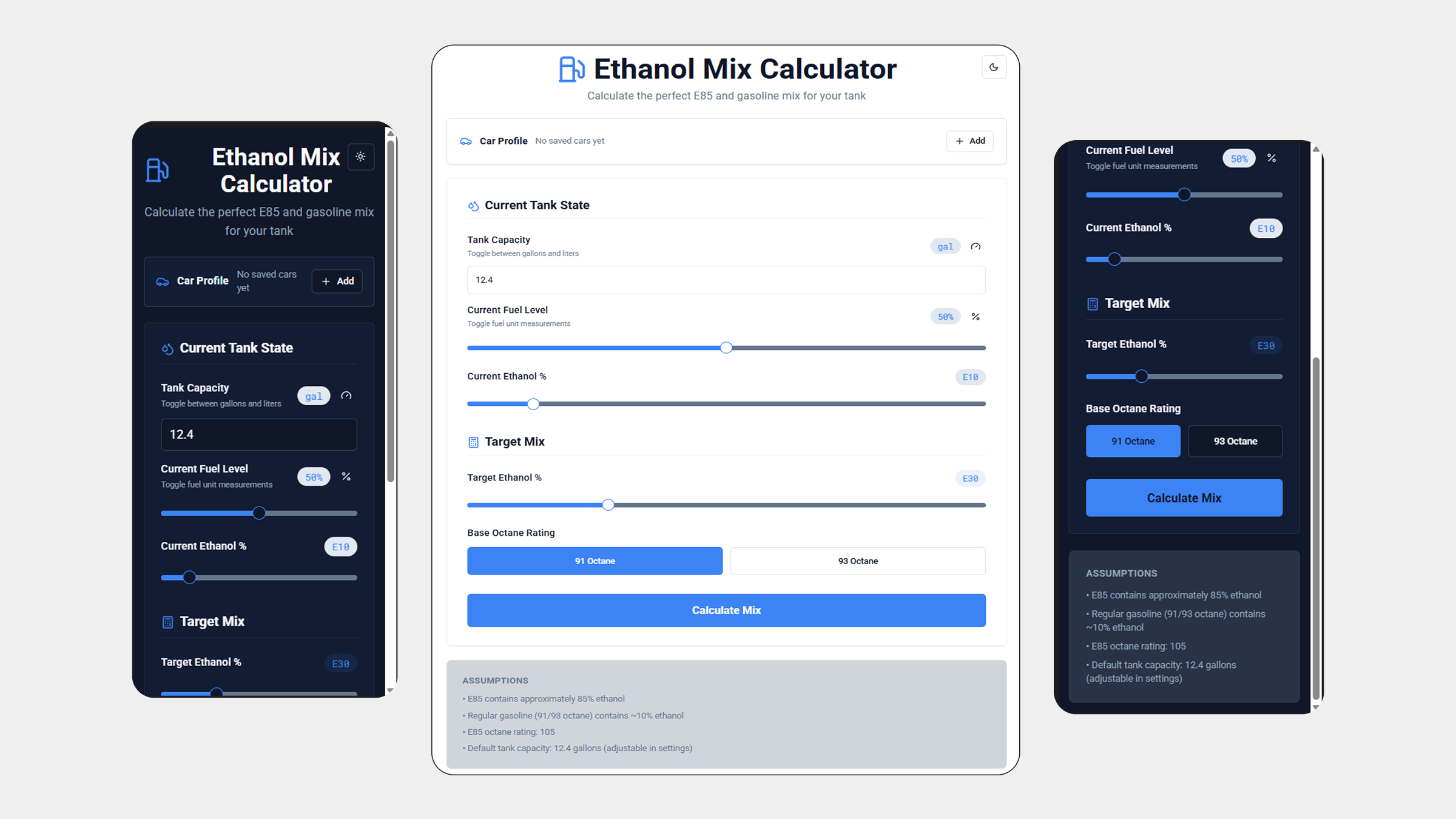
Where Precision Meets Practicality
As someone who modifies my own street car for performance, I've invested in custom tuning that requires specific fuel blends — particularly ethanol blends like E30. The challenge is straightforward but overlooked: how do you know the exact ethanol mix you're creating when you fill up at the pump?
Your 13-gallon tank has 6 gallons of 91 octane fuel already in it. You want to fill to E30. How much ethanol do you add to hit your target blend? The math isn't intuitive, and getting it wrong can detune your engine or cause damage.
Play around with the current iteration of the web app here:
Flex Fuel Buddy
02 — Why Build It
Problem + Opportunity + Learning
This wasn't just a personal convenience — it was a test. I'd noticed the same question asked repeatedly in automotive forums. People were guessing, doing math on paper, or avoiding fuel blending altogether because the uncertainty wasn't worth the risk.
I chose to build in Lovable.dev to explore the platform's rapid prototyping capabilities. Could I go from idea to functional tool in a single afternoon? That constraint forced clarity: build only what's necessary, make it intuitive, and get it working.
"Sometimes the best product solves a problem that feels too niche for traditional software — but resonates deeply with a specific community."
03 — The Solution
Simple Inputs, Precise Outputs
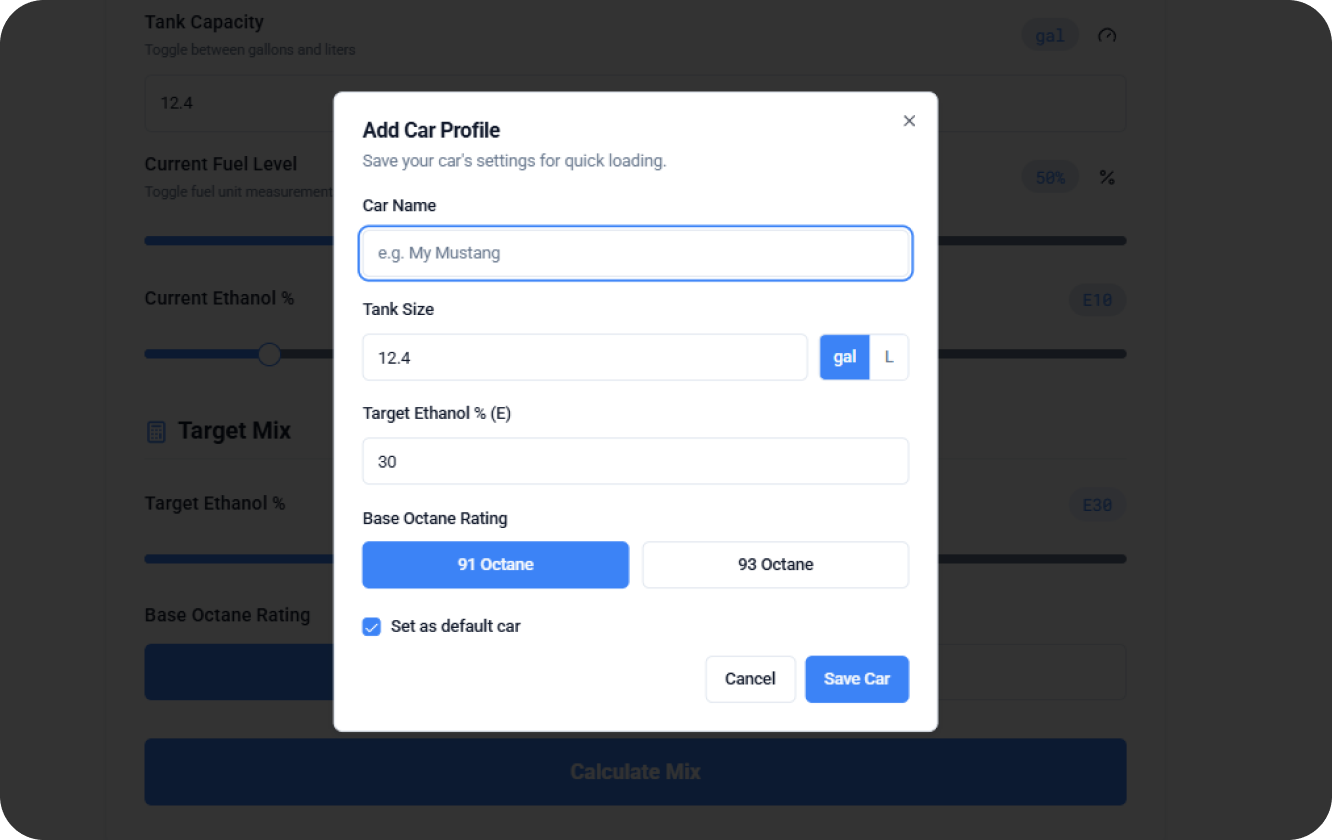
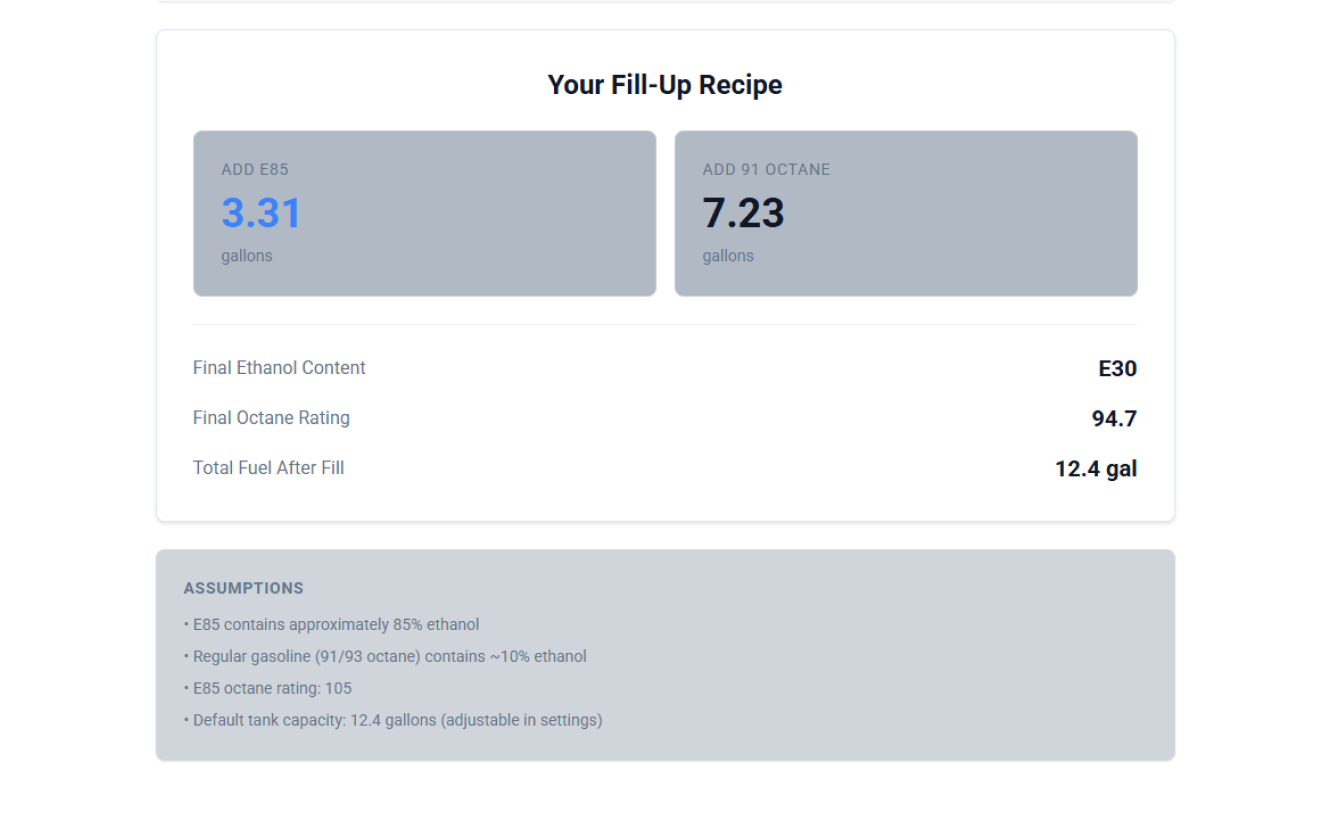
The calculator asks for three inputs and returns one critical output: exactly how many gallons of ethanol to add at the pump to hit your target blend. No guessing.
Tank capacity — Total gallons your vehicle holds.
Current fuel volume & octane — How much fuel is in the tank and its grade.
Target blend — The E-blend you want to achieve (E20, E30, E85, etc.).
04 — Building in One Afternoon
Constraints Enable Clarity
Building this in a single afternoon meant making ruthless decisions. No feature bloat. No unnecessary complexity. Just the core calculation, wrapped in a user experience that works at a gas station when you're focused on fuel.
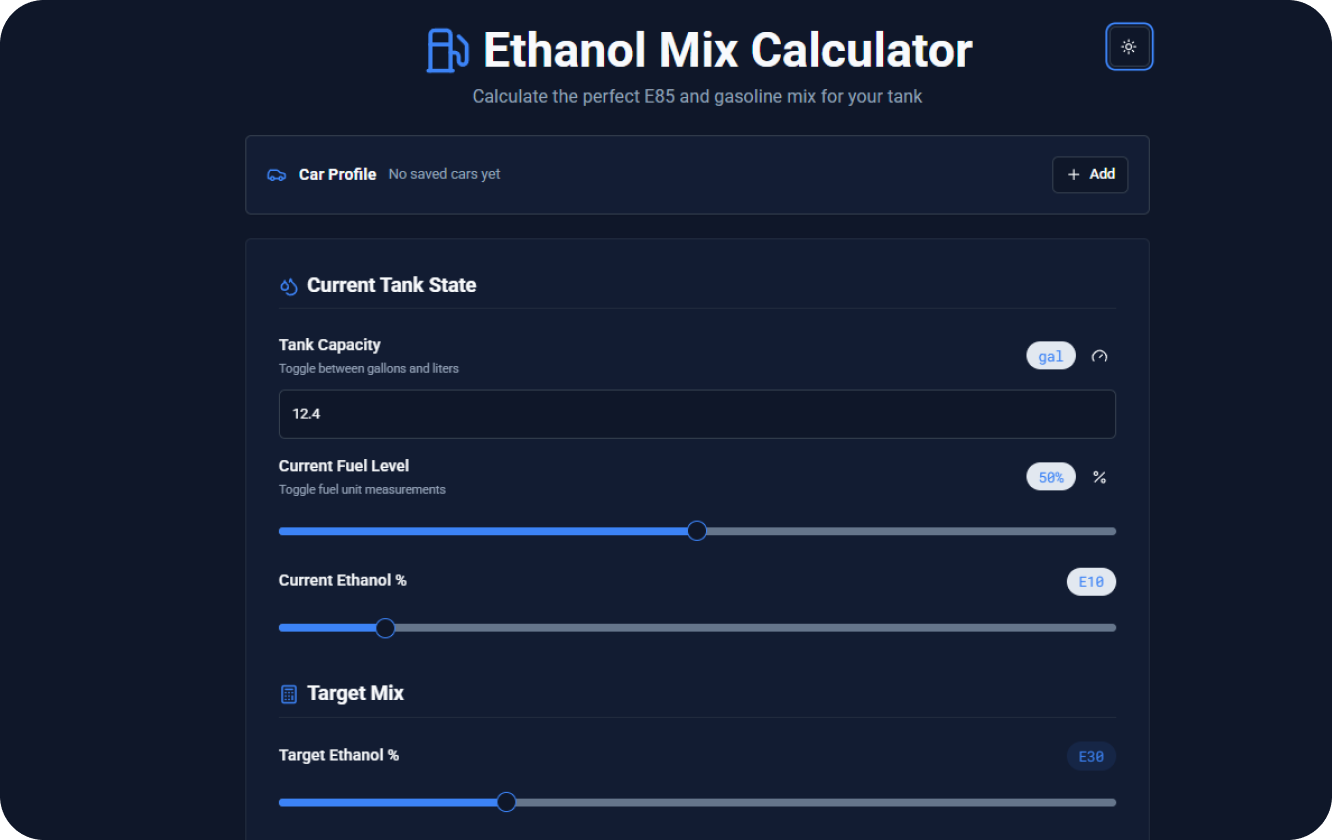
Mobile-first design — You'll use this on your phone at the pump, not on a desktop.
Zero friction — No accounts, no sign-ups, no analytics tracking. Input → output → done.
Real-time feedback — See the result update as you type, not after submitting a form.
Lovable.dev's AI-assisted development was perfect for this timeline. I could describe what I needed, iterate quickly, and refine the UX without wrestling with boilerplate.
05 — Ongoing Evolution
From Build to Refinement
The initial build solved the core problem, but using it in real life revealed opportunities: which inputs I adjust most, edge cases I didn't anticipate (different fuel grades at pumps, unusual tank sizes, regional ethanol availability), and what the community might need next.
I'm planning to release this to automotive enthusiast communities. That feedback will determine what features matter most: historical tracking, fuel economy calculations, community-shared tuning profiles, or something else entirely.
06 — Takeaway
Speed Reveals Opportunity
This project reinforced something I believe strongly as a designer: sometimes the best products come from solving your own problem first, then discovering it resonates with others. The speed of execution — one afternoon — wasn't a limitation. It was a feature that forced ruthless prioritization and built something real rather than theoretically perfect.
Play around with the current iteration of the web app here:
Flex Fuel Buddy